Why Can すみません Also Mean “Thank You”?
Why can すみません mean “thank you” in Japanese? Learn how this familiar expression can convey gratitude, and discover the idea behind this surprising use.
What does 念のため mean?
How do you say “just in case” in Japanese? Learn how 念のため is used in everyday life and at work, with practical examples and a look at the meaning behind the expression.
よろしくお願いします — What does this actually mean?
What does よろしくお願いします actually mean? Learn why this common Japanese phrase can have different English translations depending on the situation and relationship.
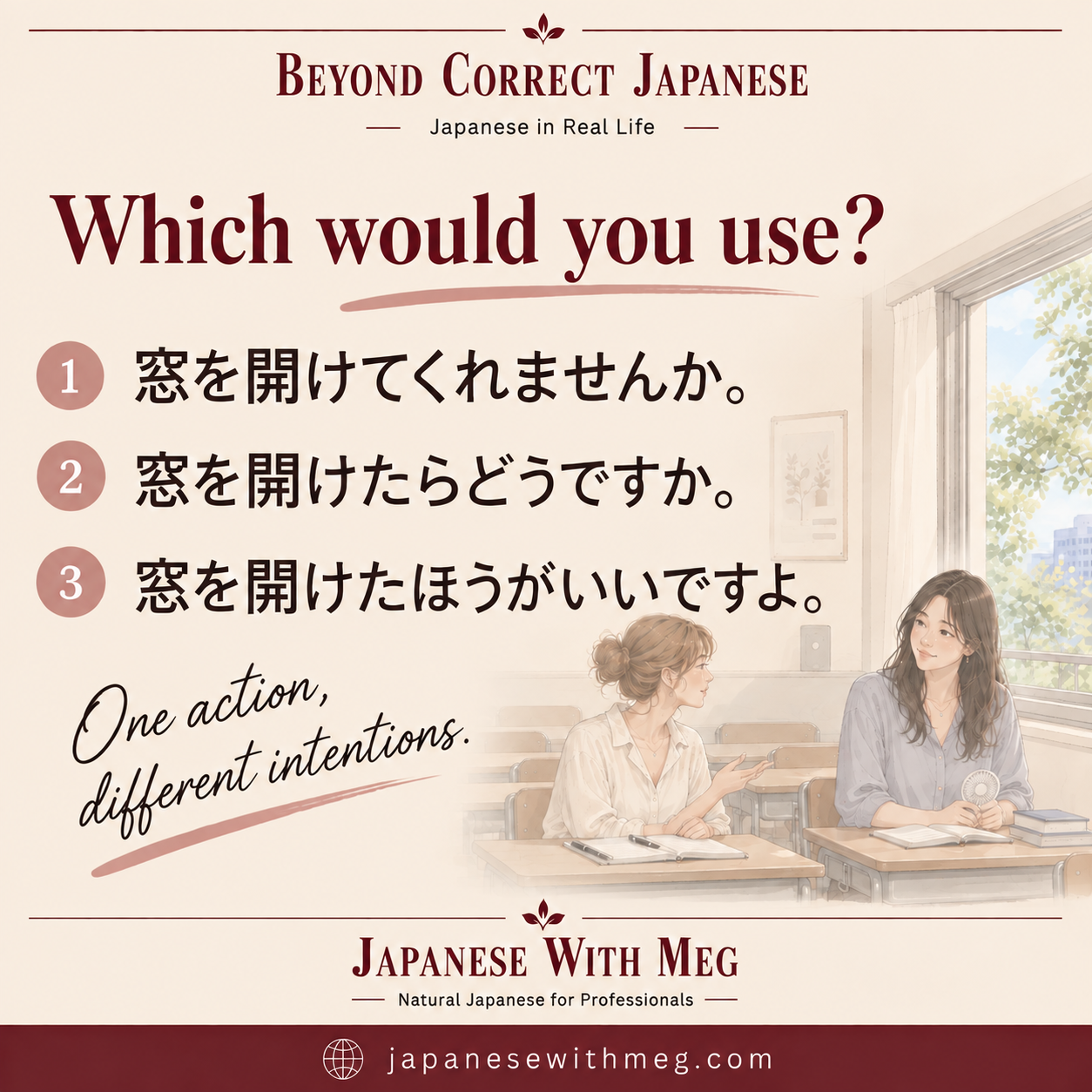
Request, Suggestion, or Advice? How to Choose the Right Japanese Expression
You may know several Japanese expressions for making requests, suggestions, and giving advice. But how do you know which one to use in a real situation? See how three similar situations can call for three different expressions.
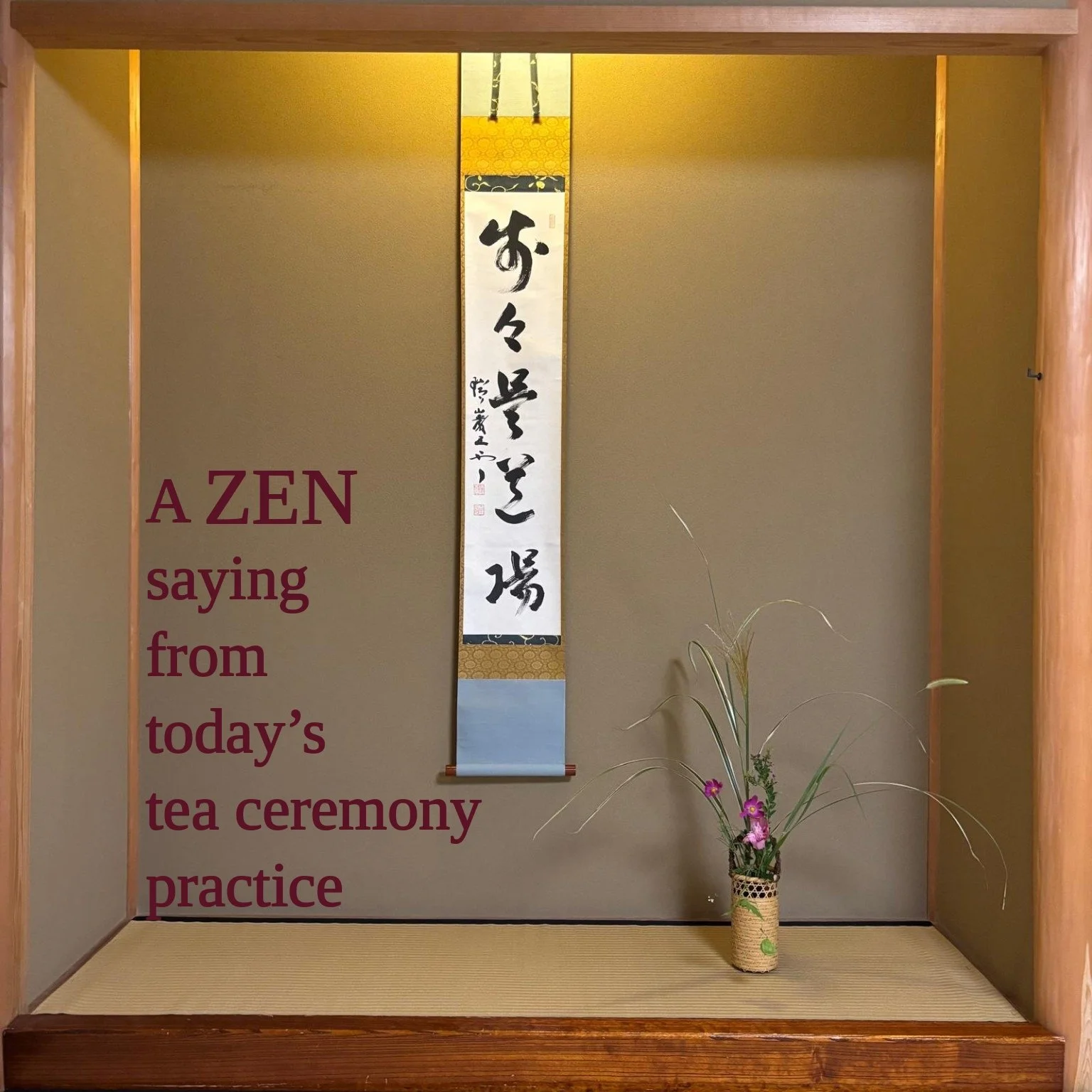
One Zen saying stayed with me after today’s tea ceremony practice.
A Zen saying I encountered during tea ceremony practice made me reflect on the paths we walk in everyday life. What can 歩々是道場 teach us about finding our path in the ordinary moments of our lives?
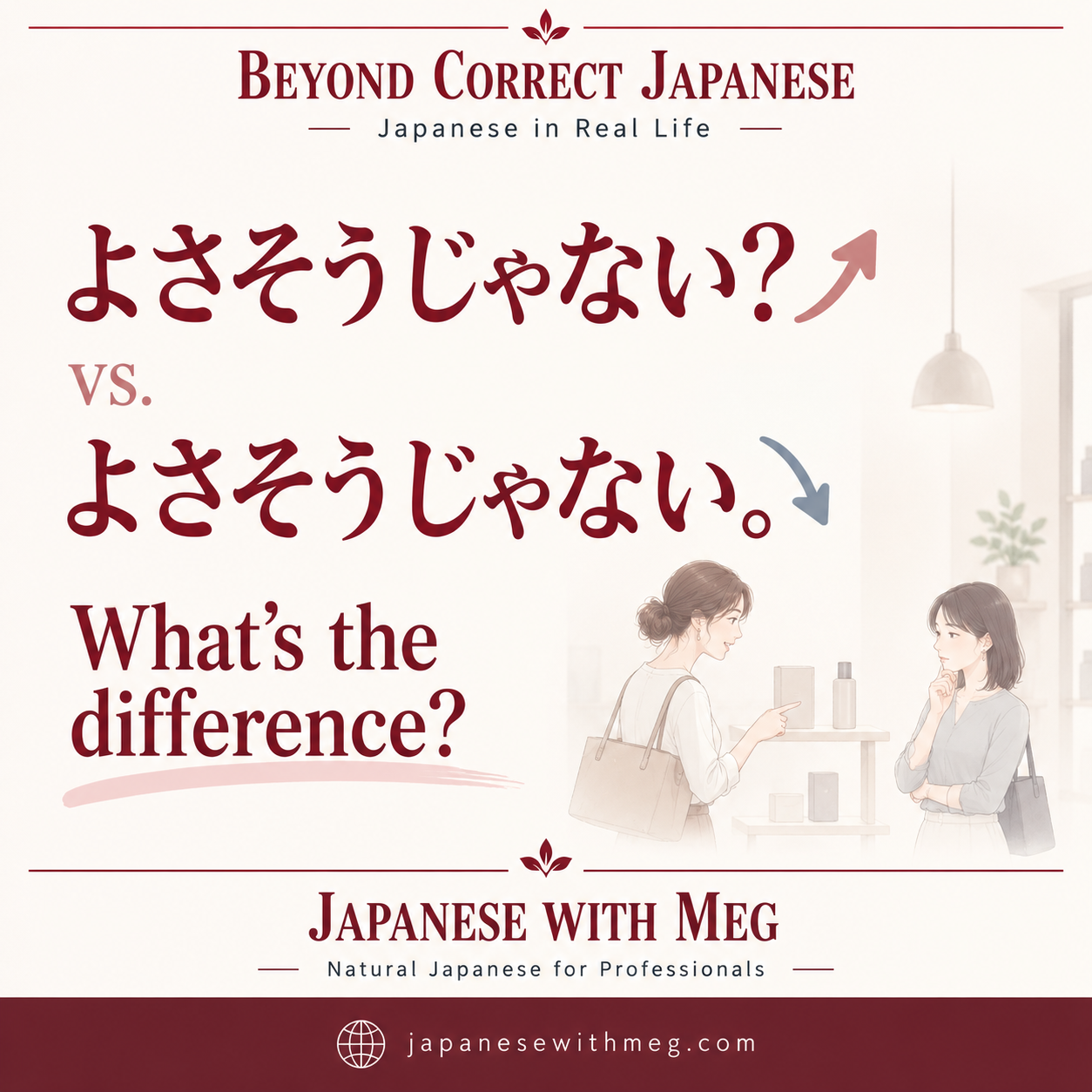
よさそうじゃない?↗ vs. よさそうじゃない。↘
What does よさそうじゃない mean? The same words can communicate very different things depending on intonation. Learn how rising and falling intonation changes what the speaker means.

Does ちょっとむずかしいです always mean “It’s a bit difficult”?
Does ちょっとむずかしいです always mean “It’s a bit difficult”? In Japanese business communication, this simple phrase can carry a very different message. Learn what it can really mean—and how to recognize it in context.

Four Years of Language Learning. What Becomes Possible?
What can four years of language learning make possible? One of my students recently gave a presentation in Japanese about her experience making sake in Japan.

A Horse “Matches”? What Do You Think It Means in Japanese?
What does 馬が合う (uma ga au) mean in Japanese? Discover the story behind this expression about people who naturally click — and what horseback riding has to do with it.
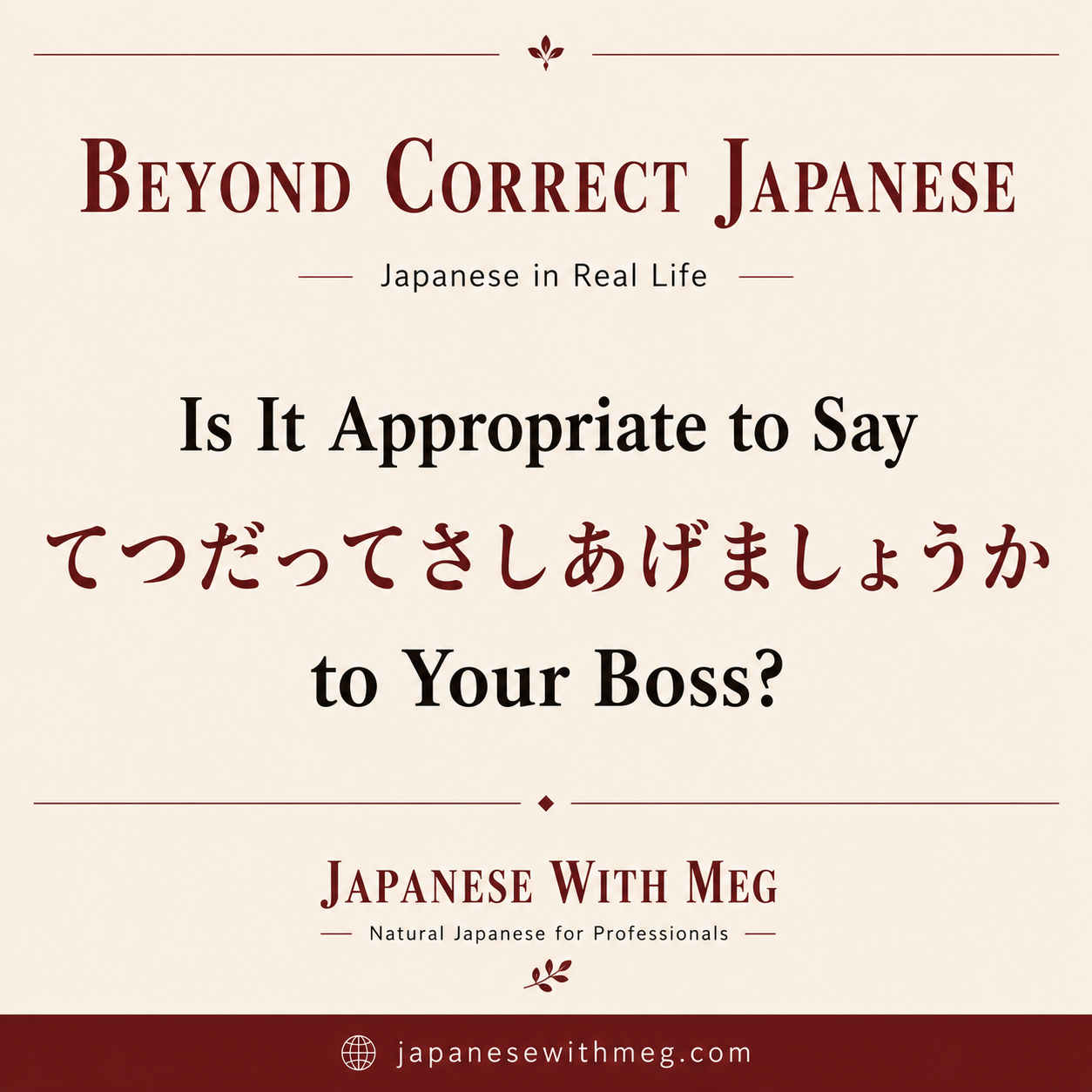
Is It Appropriate to Say てつだってさしあげましょうか to Your Boss?
Why can a humble expression sound inappropriate when speaking to your boss? Learn the nuance behind てつだってさしあげましょうか and what to say instead.
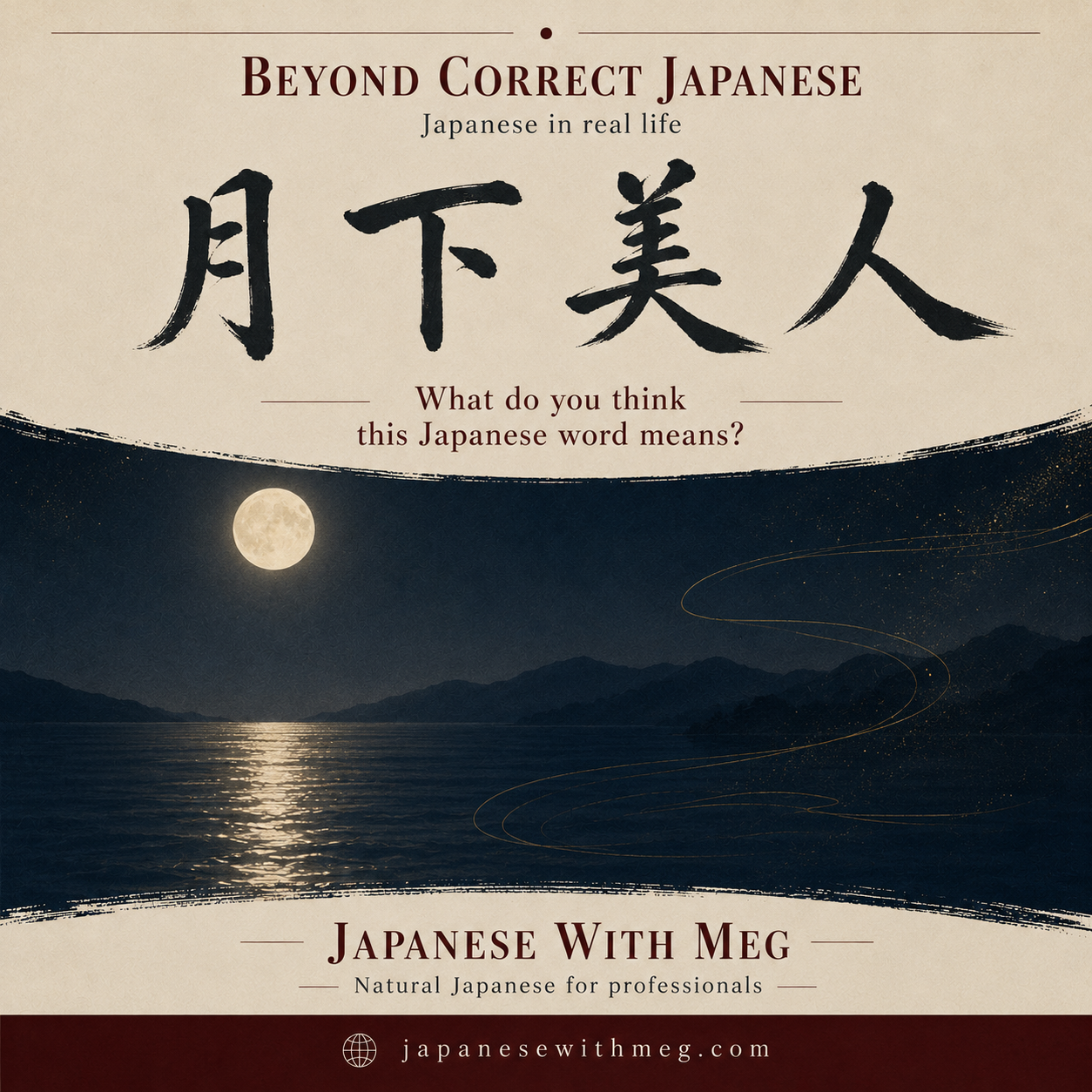
月下美人 — What do you think this Japanese word means?
A flower that blooms for only one night, with a name that means “a beauty under the moon.” Discover the story and meaning behind the Japanese word 月下美人 (Gekkabijin).
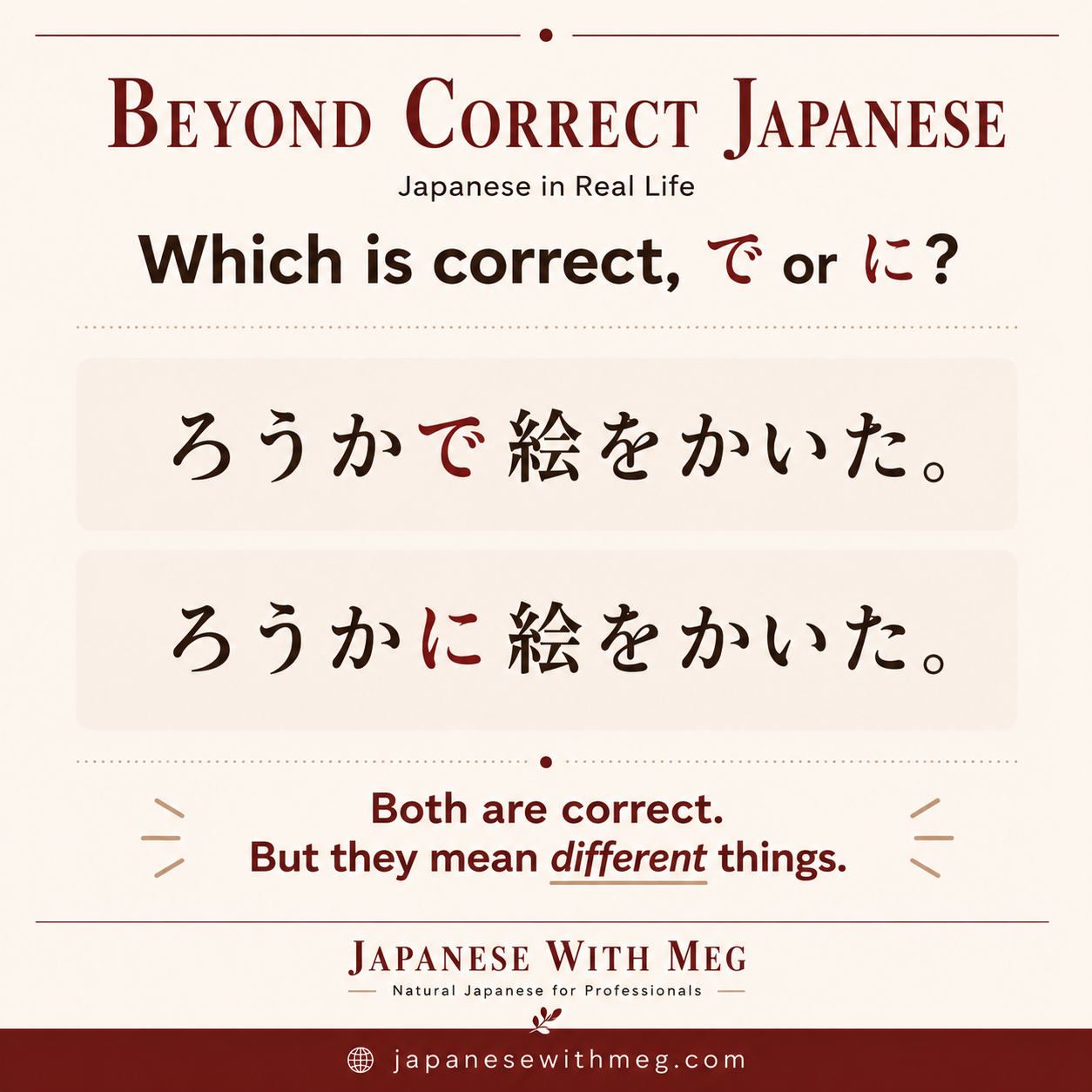
Which Is Correct, で or に? Both — But They Mean Different Things
Both で and に can be used with a place—but they don’t mean the same thing. See how changing the particle changes the meaning, and why understanding particles matters in natural Japanese.

Why Do Japanese People Call a Bike “チャリ (chari)”?
What does チャリ (chari) mean, and why do Japanese people say ママチャリ (mamachari)? A Japanese teacher explains these everyday words and the culture behind Japan’s familiar city bikes.
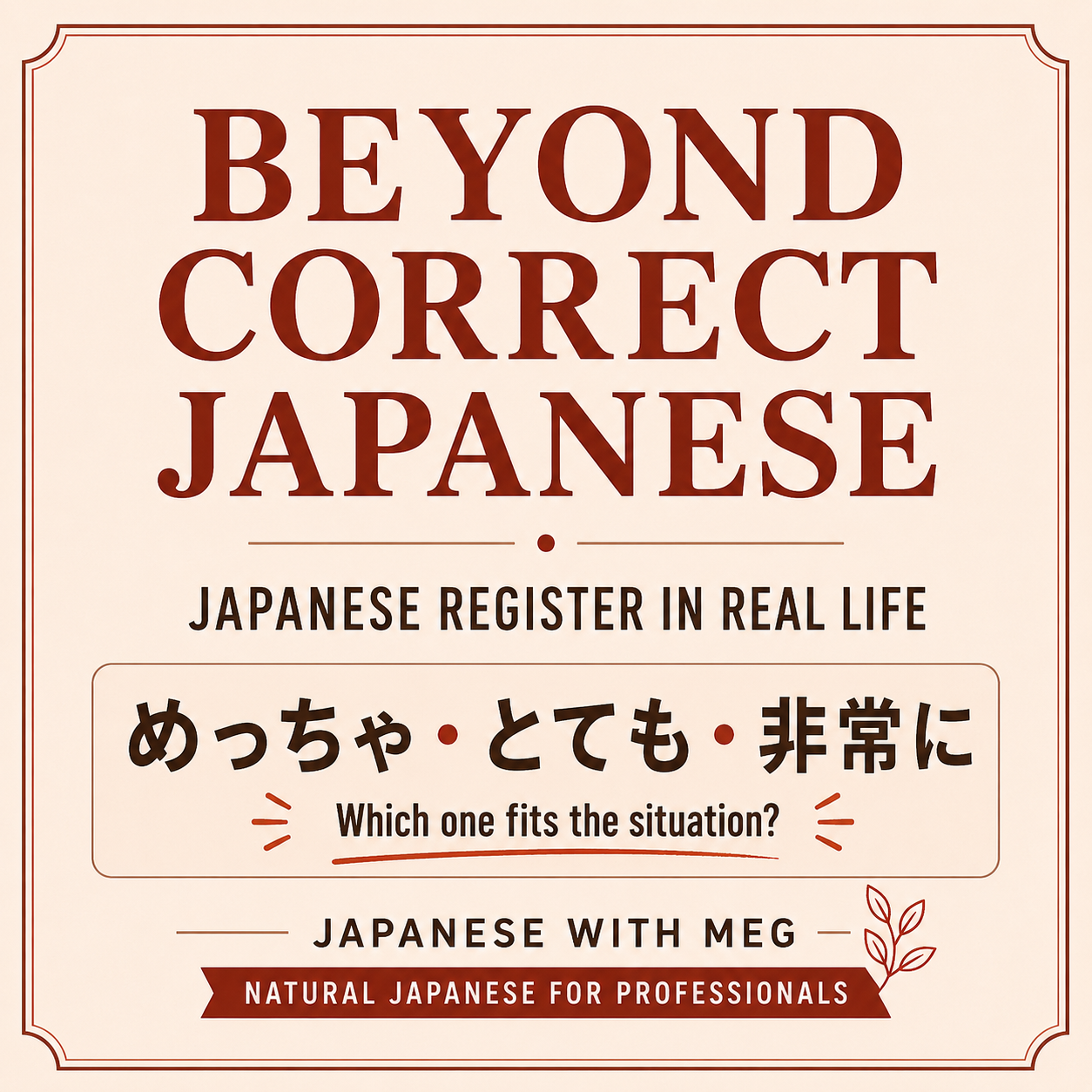
Is めっちゃおいしいです casual or polite?
Is めっちゃおいしいです casual or polite? Learn how speech style and word choice work together — and why めっちゃ, とても, and 非常に are not always interchangeable.

Is it okay to Blow Your Nose on a Train in Japan?
Is it okay to blow your nose on a train in Japan? Learn how nose-blowing is viewed in Japan and why cultural norms around it may differ from those in other countries.

Grammatically Correct—but Does It Sound Natural?
A Japanese sentence can be grammatically correct and still sound less natural depending on the context. In this lesson story, I explore how grammar, context, and actual usage shape the way native Japanese speakers express themselves.

Why Is Friday Called "Flower Friday" in Japanese?
Why is Friday sometimes called 花金 (Hanakin, “Flower Friday”) in Japanese? This lesson story explores the cultural background of the expression and shows how understanding the story behind a word can make Japanese easier to remember.

Why Do Japanese Products Say ホワイト Instead of 白?
Why do so many Japanese products use ホワイト instead of 白? A conversation with a student explores how English loanwords shape modern Japanese and what they reveal about culture.

Can AI Replace a Language Teacher? What It Can and Can't Do
Can AI replace a language teacher? As a Japanese teacher, I share my observations on what AI does well, where it still falls short, and why human teachers continue to play an important role in language learning.

Are you Learning Japanese the right way?
There is no single best way to learn Japanese. The most effective approach depends on your goals. Discover how private Japanese lessons can be tailored for everyday conversation, JLPT preparation, or travel in Japan.